Translation biology - How To Discuss
Translation biology
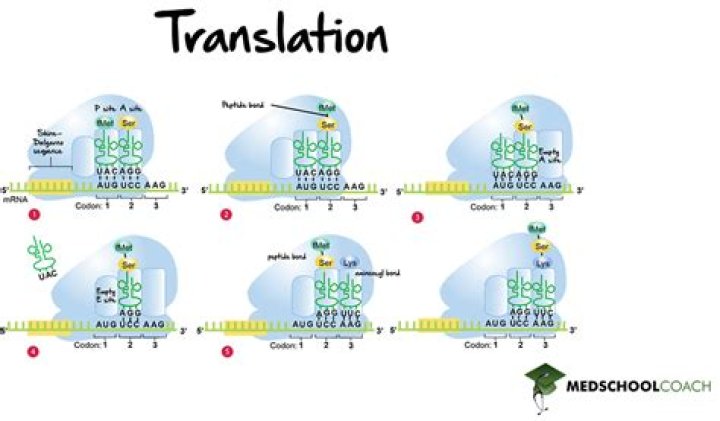
What are the steps of translation in biology? translation phases. Some people argue that there are four stages of translation: initiation, expansion, translocation, and completion. However, most scientists believe that in biology there are only three stages of translation. The same concepts are used in the transcription process to describe the process of making an mRNA strand.
What is the reason for translation in biology?
The goal of translation is to synthesize proteins that are used for millions of cellular functions. Definition. Use genes as models to create different functional forms of RNA. Translation is the synthesis of a protein from an mRNA template.
How does translation work biology?
Translation is the process in biology where the ribosome uses information stored in messenger RNA (mRNA) to bind to the amino acid sequence that makes up proteins. Translation is preceded by transcription in which the mRNA is produced.
What is the process of translation in biology?
In molecular biology and genetics, translation is the process by which ribosomes in the cytoplasm, or ER, synthesize proteins after DNA is transcribed into RNA in the cell nucleus. The whole process is called gene expression.
What are the 6 steps of translation?
Translation occurs in six phases: (i) binding of the mRNA to the ribosome, (ii) aminoacylation, (iii) initiation, (iv) extension, (v) termination and (vi) post-translational modification, (i) binding from the mRNA to the ribosome. I. Binding of mRNA to the ribosome.
What are the steps of the initiation of translation?
The first stage of translation, initiation, begins when the mRNA binds to the free light subunit of the ribosome. The transport RNA molecule then delivers the first amino acid to the light subunit of the ribosome. Other protein factors bind to this arrangement, after which the heavy ribosomal subunit binds to complete initiation.
 What are the steps of translation
Translation occurs in six phases: (i) binding of the mRNA to the ribosome, (ii) aminoacylation, (iii) initiation, (iv) extension, (v) termination and (vi) post-translational modification, (i) binding from the mRNA to ribosomes. Ribosomes dissociate in the cytoplasm, ie. the smallest and largest subunits are separated.
 Which are steps happens first in translation?
The first step of translation involves the binding of the small subunit of the ribosome to the mRNA. Translation usually begins with the sequence AUG, sometimes GUG, which encodes methionine and is known as the translation start codon. The small subunit binds to the mRNA at a specific site (ShineDalgarno sequence) upstream of the AUG.
 What are the steps to translation and transcription?
The two main steps in gene expression are transcription and translation. Transcription is the name given to the process of copying DNA to form a complementary strand of RNA. The RNA is then translated to form proteins. The major stages of transcription are initiation, promoter removal, elongation and termination.
What are the steps of eukaryotic translation?
Eukaryotic translation is a biological process in which messenger RNA is translated into proteins in eukaryotes. It has four phases: start, resume, end and reuse.
What is translation in biology Quizlet?
Translation (biology) In biology, translation is a cellular process in which proteins are produced by decoding or translating specific genetic information from DNA using a messenger RNA (mRNA) intermediate as a template.
The steps of transcription
Important to Remember: Transcription Steps The two most important steps in gene expression are transcription and translation. Transcription is the name given to the process of copying DNA to form a complementary strand of RNA. The major stages of transcription are initiation, promoter removal, elongation and termination.
What are the four steps of transcription?
Transcription occurs in four stages: pre-initiation, initiation, extension, and termination. They differ in prokaryotes and eukaryotes in that eukaryotic DNA is stored in the cell nucleus while prokaryotic DNA is stored in the cytoplasm.
 What are the three basic stages of transcription?
The transcription process can be roughly divided into 3 main stages: initiation, extension and completion. Transcription is catalyzed by the enzyme RNA polymerase. It attaches to a DNA molecule and moves along it until it recognizes a promoter sequence.
 What happens during the first step of transcription?
The first step in transcription is called pre-initiation. RNA polymerase and cofactors (common transcription factors) bind to DNA and pull it apart, creating an initiation bubble. This space allows RNA polymerase to access only one strand of the DNA molecule.
 What are the steps of translation in biology definition
The stages of translation are as follows: the ribosome binds to the mRNA in a specific region. The ribosome begins to align the anticodon sequences of the tRNA with the codon sequences of the mRNA. Each time a new tRNA enters the ribosome, the amino acid it carries is added to the extended polypeptide chain.
What is the description of the beginning of translation?
The first stage of translation is called initiation. At this stage, the mRNA, the tRNA containing the first amino acid of the polypeptide, and the two ribosomal subunits combine to start the process.
What are the steps in translation?
The correct sequence of translation steps is activation, initiation, renewal and termination.
 What is the reason for translation in biology quizlet
Translation is the process of translating the sequence of a messenger RNA (mRNA) molecule into an amino acid sequence during protein synthesis. The genetic code describes the relationship between the base pair sequence of a gene and the corresponding amino acid sequence it codes for.
 What is the reason for translation in biology definition
During translation, the cell reads information from a molecule called messenger RNA (mRNA) and uses this information to make a protein. Translation takes place constantly in a normal bacterial cell, like most cells in your body, and is key to keeping you (and your bacterial visitors) alive.
 What is the first step in translation?
The first stage of translation is called initiation. At this stage, the mRNA, the tRNA containing the first amino acid of the polypeptide, and the two ribosomal subunits combine to start the process. The small subunit then binds to both the mRNA and a specific initiator tRNA containing the amino acid methionine (MET).
 What is the reason for translation in biology ppt
Translation is the process of translating the sequence of a messenger RNA (mRNA) molecule into an amino acid sequence during protein synthesis.
Where does translation take place in a cell?
Here is a more complete definition of translation: Translation Transcription is the process of making an RNA copy of a genetic sequence. This copy, called the messenger RNA (mRNA) molecule, leaves the cell nucleus and enters the cytoplasm, where it controls the synthesis of the encoded protein.
 Which is the correct description of transcription and translation?
Here is a more complete definition of transcription: transcription. Translation is the process of translating the sequence of a messenger RNA (mRNA) molecule into an amino acid sequence during protein synthesis.
 What is the reason for translation in biology facts
Translation is the process of using information from mRNA molecules to make proteins. A specific nucleotide sequence in an mRNA molecule provides the code for the production of a protein with a specific amino acid sequence.
What is involved in translation?
Molecules involved in translation. Translation is the process of translating genetic information from the language of nucleic acids to the language of amino acids. Translation is catalyzed by a large enzyme called the ribosome, which contains proteins and ribosomal RNA (rRNA).
What is the function of translation?
The function of translation, like language, is communication. The main overall function of translation is communicative. This should always be at the center of your thinking. Therefore, translation theories should reflect language theories.
What is the reason for translation in biology terms
Elongation begins when the large subunit comes together and completion completes the elongation process. In molecular biology and genetics, translation is the process by which ribosomes in the cytoplasm or endoplasmic reticulum synthesize proteins after the process of transcription from DNA to RNA in the cell nucleus.
 What is the reason for translation in biology science
Translation Translation is the process of translating the sequence of a messenger RNA (mRNA) molecule into an amino acid sequence during protein synthesis. The genetic code describes the relationship between the base pair sequence of a gene and the corresponding amino acid sequence it codes for.
 How does DNA translation work?
DNA translation converts the mRNA sequence into the amino acids that make up proteins. This is how most of the proteins that make up cells are made. Creates the final DNA step in the protein.
 What takes place during translation?
The main translation process is the addition of an amino acid to the end of the resulting polypeptide. This process takes place in the ribosome.
 What is a translation job?
Description of the translator's activity. The professional profile of a translator involves translating texts from one language into the desired language with no interpretation for the reader, different from the original text.
 What is a freelance translator?
A freelance translator is a translator who works as a freelance contractor in a home or private office with a large number of clients and does not have a binding agreement to perform all the tasks. One of the benefits of self-employment is a more flexible schedule.
 How do translators work?
Translators facilitate communication by translating information from one language to another. The translator's job is to make the translation read as if it were the original.
 Translation work from home
Working as a home translator is sometimes referred to as a freelance translator. He is known as a translator who works as an independent contractor from home or in his personal office, has several clients and does not have a contract or agreement to do all the work.
How to find your first translation work?
Get your first customers Find customers. There are several ways to find translation work. Working on the web. Online job boards for translators and the translators looking for them are one of the best ways to find work. agencies. marketing. Instructions to follow.
How do translation programs work?
Basically translation programs work by matching segments of German text (if any), usually sentences or phrases, with their English equivalents to form "translation units".
 How does translation work biology quizlet
Translation is a message in the RNA that becomes protein, how many amino acids in the gene 20 nucleotides together are strong to encode amino acids in the genetic code all words are codons whose codon codon is a unit of three nucleotides in the mRNA that codes for an amino acid whose molecule carries codons of mRNA, which is the stop codon.
How to find literary translation jobs?
- Literary translator for beginners. Getting started as a literary translator can be difficult.
- Stay informed of the developments in the translation industry. A great way to discover new projects is to keep up with literary translation websites and websites that specialize in your field, such as B. French-English translations.
- Apply for a literary translation grant.
- Build an online presence.
Which is the correct description of the process of translation?
Translation involves "decoding" the messenger RNA (mRNA) and using its information to construct a polypeptide or chain of amino acids. In most cases, a polypeptide is just one protein (the technical difference is that some large proteins consist of multiple polypeptide chains).
 What happens to a messenger RNA during translation?
During translation, the cell "reads" the information in the messenger RNA (mRNA) and uses it to create a protein. In fact, more technically, mRNA doesn't always code for a complete protein, but rather gives instructions for it. Instead, they can safely say that it always codes for a polypeptide or chain of amino acids.
 Where does translation machinery reside in a cell?
In all cells, the translation mechanism resides in a special organelle called the ribosome. In eukaryotes, mature mRNA molecules must leave the nucleus and migrate to the cytoplasm, where the ribosomes are located.
What is the end result of translation?
The end result of translation is the formation of a new polypeptide chain.
What is the end product of translation?
Normally, the mRNA produced is polycistronic in prokaryotes and monocistronic in eukaryotes. The final translation product is a polypeptide chain that folds and undergoes post-translational modifications to form a functional protein.
What is the process of translation in biology quizlet
Translation is a message in RNA that turns into protein. How many amino acids are there in 20 nucleotides, which together can code for amino acids in the genetic code? All words are codons. What is a codon? codes for an amino acid.
Describe the process of translation
Describe the translation process. Translation is a universal process in biology where an amino acid protein is made using ribonucleic acid (mRNA) to determine the sequence of amino acids. After transcription (conversion of DNA to mRNA), the mRNA strand leaves the cell nucleus and enters the cytoplasm through the nuclear pore.
What are the major steps of translation?
Describe the main stages of the translation. Similar to mRNA synthesis, protein synthesis can be divided into three phases: initiation, elongation and termination.
 What is made during the process of translation?
Translation. The molecule produced by translation is a protein, more specifically, translation creates short sequences of amino acids called peptides that bind together and become proteins. During translation, small protein factories called ribosomes read messenger RNA sequences. The three bases of RNA code for an amino acid.
 What is the process of translation in biology examples
Translation is a universal process in biology where an amino acid protein is made using ribonucleic acid (mRNA) to determine the sequence of amino acids. After transcription (transformation of DNA into mRNA), the mRNA strand leaves the cell nucleus and enters the cytoplasm through the nuclear pore.
What is the process of translation in biology used
Translation Translation is the process of using the information in mRNA molecules to make proteins. A specific nucleotide sequence in an mRNA molecule provides the code for the production of a protein with a specific amino acid sequence.
What's the difference between transcription and translation?
- When it comes to molecular biology, transcription and translation are two main topics.
- Transcription involves the synthesis of mRNA from DNA and the synthesis of proteins from mRNA is called translation.
- Transcription and translation are processed which together with replication belong to the central cellular dogma.
 What is the process of transcription in biology?
Transcription is the process in biology by which a cell makes messenger RNA (mRNA) to direct protein synthesis, also known as translation. The mRNA copies a gene from DNA as a series of codons. Codons are groups of three bases that indicate which amino acid the ribosome should use to make proteins.
What happens in transcription and translation?
Transcription and translation are two processes that convert a DNA nucleotide sequence into an amino acid sequence to create an interesting protein. These two processes are essential. They occur in all eukaryotic and prokaryotic organisms.
What is the purpose of transcription and translation?
The goal of transcription is to make RNA copies of individual genes that the cell can use in biochemistry. The goal of translation is to synthesize proteins that are used for millions of cellular functions.
Reverse transcription biology
Reverse transcription (which occurs in both prokaryotes and eukaryotes) is the synthesis of DNA from an RNA template. A class of RNA viruses called retroviruses is characterized by the presence of an RNA-dependent DNA polymerase (reverse transcriptase). The virus that causes AIDS, human immunodeficiency virus (■■■), is a retrovirus.
 What is reverse transcription?
Reverse transcription is the process of synthesizing complementary DNA (cDNA) from an RNA template. This usually happens with retroviruses, but it also happens with some non-retroviruses such as the hepatitis B virus.
 What is the function of reverse transcriptase?
Reverse transcriptase (RT) is an enzyme used to make complementary DNA (cDNA) from an RNA template, a process called reverse transcription.
 How does reverse transcription work?
Reverse transcriptase is an enzyme that works backwards from RNA to DNA. Normal transcription involves the synthesis of RNA from DNA. Reverse transcription is the opposite of this. It is a DNA polymerase enzyme that converts single-stranded RNA into single-stranded DNA.
 What is reverse transcriptase PCR?
RTPCR, or reverse transcriptase PCR, is a variation of the standard PCR technique in which specific mRNA is amplified from very small samples. This eliminates the tedious mRNA purification process required for traditional cloning methods.
Translation biology definition
Translation refers to the process of making proteins from an mRNA template. The nucleotide sequence of RNA is translated into the amino acid sequence of proteins and this reaction is performed by ribosomes.
How to find the anticodon?
You can find the order of the anticodon even faster by simply typing in the DNA sequence with U for uracil instead of T for thymine. Then divide the sequence into three major anticodons. You can use the anticodon sequence to align the proteins added by each tRNA during translation to create an amino acid sequence.
 What does anticodon mean?
Definition of the Anticodon. An anticodon is a three-nucleotide transfer RNA (tRNA) sequence that corresponds to a codon present in messenger RNA (mRNA). Each anticodon is a sequence of three nucleotides, namely adenine (A), guanine (G), uracil (U), and cytosine (C). Each anticodon exists in an RNA transport loop.
What is the purpose of the anticodon on tRNA?
The function of anticodons is to assemble the correct amino acids into proteins according to the instructions of the mRNA. Each tRNA contains an amino acid and an anticodon.
What is a tRNA and an anticodon?
Transfer RNA (tRNA) is a small RNA molecule that participates in protein synthesis. Each tRNA molecule has two important sites: a trinucleotide site called an anticodon and a site to add a specific amino acid to it. When an amino acid is added to the growing strand during translation, the base of the tRNA molecule is linked to its complementary sequence on the messenger RNA (mRNA) molecule to ensure that the corresponding amino acid is inserted into the protein.
 How does an anticodon compare to a codon?
A codon is a group of three nucleotides, especially in mRNA. Anticodon is present in tRNA molecules. The main difference between a codon and an anticodon is that a codon is a language that is an amino acid in mRNA molecules while an anticodon is the nucleotide sequence of a codon complement in tRNA molecules.
 What is the purpose of an anticodon?
The function of the anticodon is to ensure that the amino acids in the translated protein are linked in the correct order to ensure that the protein functions properly. Protein synthesis could not have occurred without anticodons.
 How many bases in an anticodon?
An anticodon is a unit of three nucleotides that correspond to three codon bases in mRNA. Each tRNA contains a different anticodon triplet sequence, which can form 3 base pairs that are complementary to one or more amino acid codons.
What anticodon pairs with the codon Gau?
The codon GAU encodes the amino acid aspartate. The anticodon that binds to the GAU codon is CUA.
 Stages of translation biology
Translational biology: The central dogma of molecular biology often explains how genetic information circulates in biological systems. Translation overview (source :) In prokaryotic and eukaryotic cells, translation occurs in three main stages: initiation, elongation, and termination.
What are the five stages of translation?
The multi-step translation process used by professional translators limits the amount of text that needs to be translated. The first step is to get an idea of the text you want to translate. First translation. Now they translate the document in a systematic way, usually in blocks of 5 to 10 words at a time. Check the correctness of the translation. Take a break. Specify the wording of the translation.
 Transcription biology
In biology, transcription is the process of copying the DNA sequence of a gene into a similar RNA alphabet.
What are the 5 steps of transcription?
Transcription is the name given to the process of copying DNA to form a complementary strand of RNA. The RNA is then translated to form proteins. The major stages of transcription are initiation, promoter removal, elongation and termination.
What happens right before transcription begins?
Confirmed by an expert. Before the transcription starts, RNA polymerase goes to the right place. Transcription is the first step in gene expression. To do this correctly, the RNA polymerase must be ready and in the right place.
 What are the three stages of transcription?
Levels of Transcription. The transcription process can be roughly divided into 3 main stages: initiation, extension and completion.