Sleep brain waves - How To Discuss
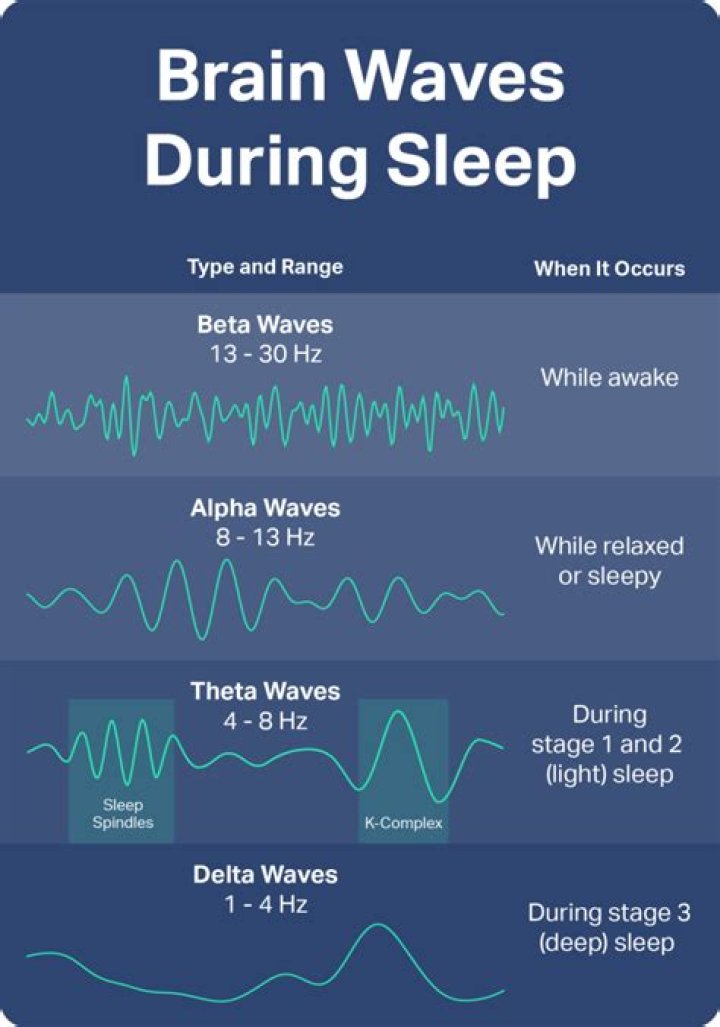
Sleep brain waves
What kind of brain waves are produced during sleep? When you are in a deep dreamless sleep, your brain produces delta waves. Delta waves are created during the deepest stages of sleep and can be achieved through incredibly deep meditation.
What are brain waves during sleep?
During sleep, the brain produces a series of electromagnetic waves. Most of these waves are created deep in the brain by parts called the thalamus and cortex. Research shows that the main purpose of these waves is to drown out potentially harmful external stimuli and promote deeper sleep.
What are the 5 brain waves?
Brain waves are generated by synchronized electrical impulses from masses of neurons interacting with each other. The five brain waves are gamma, beta, alpha, theta, and delta, which are classified from faster to slower brain waves.
What happens to brain waves during REM sleep?
During REM sleep, your brain has a higher temperature and more blood flow. Brain waves are irregular with extreme peaks and troughs and can be described as low-amplitude mixed-frequency waves with little alpha activity. Part of the brain may think that what they are doing is real.
What are the brain waves during REM sleep?
Brain activity during REM sleep is largely characterized by low-amplitude mixed brain waves very similar to those in the waking state: theta waves, alpha waves, and even high-frequency beta waves, which are more typical of waking and thinking.
How do different frequencies affect the brain?
Sometimes whole groups of neurons are active at the same time, which can be seen on the EEG as brain waves. Different frequencies are associated with different tasks or moods. Gamma waves, which oscillate at a frequency of 30 to 100 cycles per second, are associated with memory and attention.
 What is the speed of brain waves?
Beta brain waves: 12 Hz to 40 Hz Beta brain waves are fast brain waves with a frequency range of 12 Hz to 38 Hz (cycles per second).
 What are the four types of brain waves?
Well, of course, four different types of brainwaves! Alpha, Beta, Gamma and Delta are four types of brain waves that your brain produces at different times to perform different functions.
 What is high frequency brain waves?
Gamma waves (38 to 42 Hz) Gamma brain waves are the fastest brain waves (high frequency, like a whistle) and refer to the simultaneous processing of information from different brain regions. Gamma brainwaves transmit information quickly and silently.
What is the amplitude of a brain wave?
Determination of the amplitude. Amplitude. In physics, the amplitude of a sound wave or electrical signal is its strength. As you fall asleep, the amplitude of your brain waves slowly increases. Amplitude is the property of being large or quantitative.
What are the four types of brainwaves?
In the future, the scientist will certainly offer a more accurate method. Brainwaves are divided into 4 categories: beta, alpha, theta and delta. The beta is related to your standby activity. During the day they experiment with all beta-dominated brain wave patterns.
What happens to the hippocampus when brainwaves increase?
As theta brain waves increase, the brain's ability to retrieve and store long-term memories increases. The hippocampus, the part of the brain involved in storing and processing memories, generally has a theta brainwave rhythm. As stress builds, beta brain waves "destroy" the hippocampus.
 What are Theta brainwaves used for in hypnosis?
Theta brain waves are present during deep relaxation, dreams, meditation and hypnosis. Theta brainwaves can be a source of creativity, intuition, memory and concentration.
When did the field of brain waves peak?
The history of brain wave self-regulation (neurofeedback) itself has certain wave properties. As previously reported, this domain quickly gained popularity, peaking in the early 1970s and then in the late 1970s and mid 1980s.
What are the types of brainwaves?
Brain waves are generally divided into five fundamental frequencies: beta waves, alpha waves, theta waves, delta waves, and gamma waves. Brain waves differ not only in frequency (waves occur over a period of time), but also in amplitude (depth and height of each wave).
 What kind of waves does the human brain produce?
Gamma brain waves are the fastest brain waves produced in your brain. While they can be difficult to measure accurately, they tend to measure more than 35 Hz and can fluctuate up to 100 Hz. Your brain tends to produce gamma waves when you are intensely focused or actively involved.
 What are the brain waves called?
They are also called Berger waves, after the founder of the EEG. Alpha waves are a type of brain wave that can be detected by electroencephalography (EEG) or magnetic encephalography (MEG) and quantified by quantitative electroencephalography (qEEG).
What are brain waves during sleep stages
The five stages of sleep are falling asleep, light sleep, two associated stages of deep sleep, and rapid eye movements or REM during sleep.
What is the brain activity during sleep?
When you wake up and sleep, the brain's electrical activity changes, creating different types of brain waves that characterize the different phases of sleep. There are two main phases of sleep: rapid eye movements (REM) and non-rapid eye movements (NREM), which are then divided into three phases.
 What happens to your brain when you sleep walk?
So to answer this question, what happens in your brain is that you actually sleep when you sleep, or rather, you sleep deeply or slowly. Because of this, people can't remember what to do after walking in their sleep. There is a continuum when it comes to sleepwalking or dreaming.
 When does SLeepwalking occur during slow wave sleep?
Sleepwalking, also known as sleepwalking, is a parasomnia that occurs when you wake up from a slow wave sleep. This most often occurs in the first trimester or mid-sleep period, when slow wave sleep is most common.
When does SLeepwalking occur in a parasomnia?
Sleepwalking and Sleepwalking Sleepwalking, also known as sleepwalking, is a parasomnia that occurs when you wake up from slow wave sleep. This most often occurs in the first trimester or mid-sleep period, when slow wave sleep is most common. Sleepwalking consists of a series of complex behaviors.
 What are the different brain waves during sleep?
Each of these brain waves has a normal frequency range in which they operate. What brain waves are generated during REM sleep? Two types of brain waves dominated: theta waves, relatively slow waves with a frequency of 4 to 8 cycles per second (Hertz), and beta waves, which are faster, with a frequency of 15 to 35 Hertz.
 What are brain waves during sleep mcat
Brain waves are characterized by carotid spindles and K complexes, which are short bursts of higher frequency waves. In addition to these interruptions, general wave patterns follow theta wave trends. During N3, the person falls into a deep sleep. Brain activity is characterized by a strong presence of delta waves at very low frequencies.
 When do you go to sleep in MCAT Stage 1?
Then you start sleeping when you enter phase 1 without REM sleep. This is when alpha waves are usually replaced by theta waves. If you go to Stage 2 without REM sleep, you still have theta waves, but now you also have sleep spindles and K complexes. Phase 3 without REM sleep is dominated by delta waves.
How to memorize the stages of sleep and brain waves?
The motto for remembering brainwaves for each stage of sleep: Bats drink blood. This will help you remember the order of your brainwaves as you go from wakefulness and wakefulness to REM sleep. So bats: bats.
What kind of waves are found in sleep?
Theta waves are typical of the early stages of sleep (stages 1 and 2). These waves have a moderate amplitude and frequency. Delta waves occur during the stages of deep sleep (stages 3 and 4). These waves are characterized by their high amplitude and low frequency. Practices such as hypnosis and meditation can further alter these waveforms.
 What are beta waves and theta waves in sleep?
Beta waves are typical of wake and wake states or REM sleep. These waves are low amplitude, high frequency sawtooth waves. Theta waves are typical of the early stages of sleep (stages 1 and 2). These waves have moderate amplitude and frequency.
What are alpha and theta brain waves?
Alpha waves are the "frequency bridge" between your conscious mind (beta) and your subconscious mind (theta). They are known to calm you down and induce deeper feelings of relaxation and contentment.
What is the frequency of theta brain waves?
Theta brain waves: 4 to 8 Hz Theta brain waves are considered brain waves that oscillate between frequencies of 4 to 8 Hz (cycles per second).
 What are the 5 brain waves meditation
So here are 5 brain waves: 1 delta brain waves (-4 Hz) 2 theta brain waves (4 Hz - 7 Hz) 3 alpha brain waves (7 Hz - 13 Hz) 4 beta brain waves (13 Hz) - 39 Hz) 5 gamma brain waves ( 40Hz +).
 What are the 5 types of brain waves?
Your brain produces 5 types of brain waves, which are electrical impulses between neurons that transmit actions, emotions and ideas: alpha, beta, delta, gamma and theta. Alphas are associated with mediation and a sense of calm and serenity. Beta can cause excitement and anxiety at high frequencies.
 What kind of brain waves do you get during meditation?
During meditation, the brain mainly exhibits theta waves. These waves are associated with a relaxed mental state compared to alpha waves associated with an alert mental state. 1.
 What are the effects of meditation on the brain?
Function: Delta waves increase the production of two anti-aging hormones, DHEA and melatonin. They help develop deep compassion and empathy for others, improve social intelligence, and prevent conflict. The waves promote rapid healing. During meditation, the brain mainly exhibits theta waves.
 What kind of brain waves do zen masters produce?
Delta brain waves are common in children under 1 year old (I think this is subjective). They are also the last brainwaves before death. Zen masters and monks should emit delta waves in deep meditative states.
What are the 5 brain waves meditation healing
Generating Brainwaves for Healing Of the 5 frequencies (beta, alpha, theta, delta and gamma) that your brain perceives, the theta brainwave region is where the body's natural self-healing processes are activated and optimized.Theta brainwaves are present during deep relaxation, dreams, meditation and hypnosis.
 What are the 5 different types of brainwaves?
ThetaHealing™ and 5 types of brainwaves. To understand what ThetaHealing™ and theta state are, you must first understand brain waves. There are five different brainwave frequencies: beta, alpha, theta, delta and gamma. They are in constant motion because the brain is constantly producing waves of all frequencies.
 Why are brain waves so important in meditation?
Scientists identified alpha early on as an important brainwave pattern in meditation. For this reason, consumer-grade biofeedback devices are often focused on alpha learning. However, the meditative state is more complex and effective meditation includes other important elements as well.
 Why are gamma waves important to the Awakened Mind?
According to Judith Pennington, founder of the Institute of Awakened Mind, Gamma is a government agent. These waves synchronize the brain into frequencies, making them more coherent. In addition, gamma supports the flow of information through the cerebral hemispheres and even the peripheral nervous system.
 What are the 5 brain waves frequency
Five brain waves, in order from lowest to highest frequency: delta, theta, alpha, beta and gamma. Presentation of the 5 frequencies During the day, your brain uses certain waves to process certain situations.
Which is the slowest frequency in the brain?
Here is a description and overview of 5 different frequencies. DELTA WAVES - Delta waves are known to be the slowest in humans and are most common in young children and infants. The amount of generated delta waves decreases with age during wakefulness and sleep. Delta waves are most often seen during sleep.
What are the frequencies of Delta brain waves?
Proper production of delta waves helps them feel completely refreshed after a good night's sleep. When abnormal delta activity is observed, the person may have learning difficulties or difficulty maintaining consciousness (as happens with brain damage). Frequency Response: Hz to 4 Hz (slower).
What are the waves in the middle of the brain?
ALPHA WAVE: Alpha waves look like this. These are waves that form a bridge between your subconscious and your consciousness. They can be called "resting" waves because they are in the middle of 5 different frequencies. When a person meditates or practices mindfulness, these are waves that are present.
 What are the 5 brain waves produced
Brain waves are generated by synchronized electrical impulses from masses of neurons interacting with each other. The five brain waves are gamma, beta, alpha, theta, and delta, which are classified from faster to slower brain waves. The speed of brain waves is measured in hertz (cycles per second).
 What are the 5 brain waves made
What are brain waves? Brain waves are generated by synchronized electrical impulses from masses of neurons interacting with each other. The five brain waves are gamma, beta, alpha, theta, and delta, which are classified from faster to slower brain waves. The speed of brain waves is measured in hertz (cycles per second).
 What are the 5 brain waves of stress
Each of them helps to cope with different situations, be it processing and learning new information or calming down after a long and stressful day. Five brain waves, from highest to lowest frequency: gamma, beta, alpha, theta and delta. 5 Brainwaves: Frequencies to Understand.
 How are brain waves related to stress and anxiety?
Increased alpha brain wave production can not only reduce stress and anxiety, but also allow people to stay more focused. In his research, Dr. James Hardt that there is a direct link between an increase in alpha brain waves and a decrease in anxiety.
Which is the highest frequency of brain waves?
Brainwaves are divided into five different categories, each associated with a specific task and mental state. The highest frequency of brain waves is known as gamma waves.
How are beta waves channeled in the brain?
They are transmitted during states of consciousness such as cognitive thinking, arithmetic, reading, speaking or thinking. Higher levels of beta waves have been found to have a stimulating and uplifting effect, allowing the brain to limit the number of alpha waves when beta activity increases.
 What type of brain waves are present during REM sleep?
Beta waves occur in people who are alert and alert to external stimuli or who are subject to some degree of mental stress. Beta waves also occur during deep sleep, REM (rapid eye movements) sleep, when the eyes move back and forth. Note that the amplitude of beta rhythms is generally smaller than the amplitude of alpha rhythms.
 What does the brain produce during REM sleep?
Sleep-stimulating cells in the hypothalamus and brainstem release a chemical called GABA, which reduces the activity of arousal centers in the hypothalamus and brainstem. The brainstem (especially the pons and medulla oblongata) also plays a special role in REM sleep, sending signals to relax the muscles needed for postural and limb movements, preventing them from performing their functions.
 Is it bad to wake up during REM sleep?
Sleep laziness results from a sudden awakening during REM sleep. If you wake up during REM sleep, you will still have high levels of melatonin, which will make you sleepy. The more you sleep, the higher your melatonin levels will be during REM sleep.
 What happens to your mind/body during REM sleep?
During REM sleep, brain waves and eye movements are amplified. Your heart rate and breathing will also increase. Dreams often occur during REM sleep. Your brain also processes information at this stage, making it important for learning and memory.
 What happens to brain waves during rem sleep disorder
What Happens to Your Brain and Body During REM Sleep? This phase is also called fast (REM) sleep because of the characteristics of the brain waves that occur during this cycle: asynchronous, fast and low voltage. According to experts, the area of the brain that regulates this sleep phase is the brainstem.
What happens to brain waves during rem sleep syndrome
During REM sleep, the brain hallucinates (dreams) in the paralyzed body, and the EEG activity recorded by the scalp is similar to the activity in the waking state. Atony, or total loss of muscle tone, prevents them from realizing their dreams and hurts them while they sleep.
 What happens to brain waves during rem sleep cycle
The activity of brain waves during REM sleep is very similar to that of your active, awake brain and consists of short periods of activity in desynchronized patterns. Since each cycle ends during your night's sleep, the REM period gets longer, meaning the more you sleep, the more "awake" your brain is.
Deep sleep brain waves
What is deep sleep? Deep sleep is the sleep phase associated with the slowest brain waves during sleep. Because the activity of the EEG is synchronized, this phase of sleep is known as slow wave sleep - it creates slow waves with a relatively high amplitude and a frequency of less than 1 Hz.
 What happens to the mind in deep sleep?
Deep sleep helps the brain create and store new memories and improves its ability to gather and access information. This sleep phase also helps the brain recover from a day of thinking so that it can replenish energy in the form of glucose the next day.
 What is the deepest level of sleep?
REM sleep is the deepest level of sleep in which dreams usually occur. "We have shown for the first time that sleep apnea, a condition that is becoming more common, can negatively affect the formation of certain memories, even when sleep apnea is limited to REM sleep," the doctor said.
What are the 3 stages of sleep?
A healthy adult's sleep cycle usually begins with slow wave sleep, which consists of three distinct phases: N1 phase, N2 phase, and N3 phase.
 What is the ideal sleep cycle?
The sleep/wake cycle is a daily routine that determines when to sleep and when to wake up. For most people, the ideal cycle is seven to nine hours of sleep (usually at night), followed by being awake for 15 to 17 hours.
What is the last stage of sleep?
The last phase of the sleep cycle, REM sleep, occurs about 90 minutes after you fall asleep, and it is during this phase that the muscles shut down and the body relaxes and calms down.
What is Stage 2 of sleep cycle?
Stage 2 is the second stage of sleep and lasts about 20 minutes. The brain begins to produce pulses of faster and more rhythmic brain activity, called sleep spindles.
 What should they know about stages of sleep?
Stage 1 of the sleep cycle is the lightest stage of sleep. The brain frequency on the EEG is slightly lower than during waking hours. Muscle tension is present in skeletal muscles. Breathing takes place at a normal rate. Level 2 generally follows Level 1 and represents deeper sleep. During level 2 sleep, the person who is asleep is less able to wake up.
What stage of sleep is the hardest to wake someone?
The third and fourth stages are known as deep sleep and are often the hardest to wake up. If you try to wake someone up in the third or fourth step, they will likely feel disoriented and dizzy within minutes of waking them.
What is Stage 4 sleep?
Stage 4 of sleep: the second stage of deep sleep. At this point, the brain almost exclusively produces slow delta waves. It is also very difficult to wake someone up at this point.
What are the different stages of sleep actually mean?
What are the stages of sleep? NREM 1: The first phase describes the transition from the waking state to the resting state. NREM 2: Level two is also light sleep, although heart rate, respiratory rate, eye movements, and brain wave activity decrease to levels lower than NREM 1. NREM 3: This stage marks the beginning of waves of slow or deep sleep.
Light sleep brain waves
When you sleep more easily or very relaxed, your brain can produce more theta waves. Theta waves oscillate between 4 and 8 Hz. Alpha waves, as mentioned, are in the middle range of the brain wave spectrum.
 Rem sleep brain waves
Neural activity during REM sleep seems to originate in the brainstem, specifically in the mucosa of the pons and the blue spot. REM sleep is interrupted and immediately preceded by PGO (pontogenulo-occipital) waves, bursts of electrical activity emanating from the brainstem.
 How can brain waves produced during REM sleep BR described?
This brain wave can be activated by simply closing your eyes and relaxing. Alpha waves occur during REM sleep when you are asleep. Your brain produces alpha waves when you are calm and happy, and when you are relaxed and creative. Alpha waves also occur during sleep.
Slow wave sleep brain waves
SlowWave Sleep, or SWS for short, is the deepest state of sleep and plays a vital role in creating a vibrant sense of well-being. During this phase of the sleep cycle, the brain begins to produce large, very slow waves. Stopping this state of sleep can lead to a variety of unpleasant sensations such as depression, drowsiness, excessive demands, and general malaise.
 What is also known as slow-wave sleep?
Slow wave sleep (SWS), also known as level 3, is characterized by lack of exercise and difficulty waking up. NREM sleep, which occurs in both hemispheres, is known as bio-hemispheric slow wave sleep (BSWS) and is common in most animals.
 What is associated with slow wave sleep?
Parasomnia, a category of sleep disorders, is often associated with slow sleep disorders. Sleepwalking and sleepwalking are more common during periods of high delta wave activity.
What are the 4 stages of sleep?
You go through four sleep stages: 1, 2, 3, and REM sleep. Your dream is divided into two parts: NREM (slow eye movement) and REM (fast eye movement). The first three levels are part of the NREM. The fourth and final step is REM. When you fall asleep, you alternate these phases.
What is slow wave sleep (SWS)?
REM sleep (REM) is an active phenomenon probably caused by the activation of serotonergic neurons in the attachment system. The slow wave in the cortical EEG is generated by a thalamocortical connection via thalamocortical neurons.
What is the best sleep music?
Studies have shown that classical music is the best music for falling asleep, as well as favorite children's songs, such as lullabies, which are suitable not only for babies, but also for adults: they help to calm down and relax at the same time. Well-known songs generally work well, as do easy-to-listen jazz and folk variations.
 What is the best Sleep Sound?
The best sounds for sleeping are repetitive and relaxing sounds. Making calming sounds when you fall asleep is especially helpful if you live in a noisy environment, as it masks annoying outside noises and helps calm your body.
Can sleep music really help you sleep better?
A recent meta-analysis of 10 high-quality studies of musical sleep found that music helps people with short-term and chronic sleep problems. In a typical study, people listen to relaxing melodies (such as classical music) about 45 minutes before bedtime.
What are the best binaural beats for sleep?
Therefore, the best binaural beat for falling asleep is 4 Hz or less. This frequency causes your brain waves to mimic delta waves, the same brain waves you experience during deep dreamless sleep.
Sleep brain waves sound
Theta waves (48 Hz) generally occur during lighter sleep. They are associated with creativity. Alpha waves (812 Hz) are also associated with creativity and a relaxed but alert state of mind. Beta waves (1321 Hz) are the brain waves that people experience the most.
 What sounds can help you sleep?
White noise tends to mask other noises that occur at night, such as B. dogs barking, horns, or noisy neighbors. The frequency of white noise can often minimize the sound of this type of sleep disturbance by muffling the sound, Fish said.