Hydraulic arm - How To Discuss
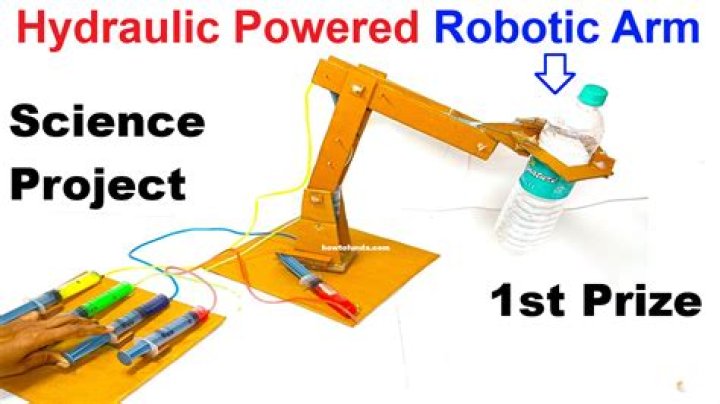
Hydraulic arm
How does a pump in a hydraulic arm work? A hydraulic arm works with high fluid pressure from a pump to move a piston in a cylinder. When the valve opens in one direction, liquid can enter the cylinder and cause the piston to move. An example of a typical hydraulic system is a lever operated three-way valve. In the intermediate position, the valve is closed.
Is it possible to make your own hydraulic arm?
In this tutorial they show you how to make your own hydraulic arm. This project deals with the principles of hydraulic movements. For this they performed a small demonstration of a hydraulic robot arm. You managed to do some cool things with your hand, watch the video below to understand better!
How do you attach a hydraulic arm to a post hole
Assemble the two bases and the post with two screws. Recessed so that the screw heads do not protrude from the top and bottom bases. Secure the arm to the rack with a machine screw, three washers and a wing nut. Insert the cup ■■■■ into the end of the handle.
What to do in the hydraulic arm challenge?
One team designs and builds the grab arm, another team equips the lifting arm, and a third equips the base for turning. All three groups must work to communicate effectively through written and ■■■■ communication and sketching.
What is the function of a hydraulic pump?
A hydraulic pump is a mechanical device that converts mechanical energy into hydraulic energy. Creates a flow with sufficient force to overcome the pressure created by the load. When the hydraulic pump is running, it has two functions.
How does a hydraulic ram pump get started?
An exception that benefits the hydraulic cylinder pump. The plunger pump is mainly composed of two check valves, one of which is called a discharge valve and the other is called a discharge valve. To start, open the drain valve briefly so that the water can flow out.
 How is the hydraulic pump similar to the heart?
A hydraulic pump has a similar function to the human heart, supplying blood to various organs. In this way, the heart also acts as a pump and control valve. This is because the function of the human heart is to pump blood and it also has valves inside.
 What is the compensator setting on a hydraulic pump?
Pressure Compensator on Hydraulic Pump and Motor The compensator pressure pump provides full pump flow at pressures below the compensator set point. Once the pump capacity is limited, the pressure will increase until the compensator is adjusted, after which the pump will vent to the level necessary to maintain the compensator pressure setting.
How does a pump in a hydraulic arm work with another
First, the mechanical action creates a vacuum at the inlet of the pump, after which atmospheric pressure can displace the liquid from the reservoir and then pumps it into the inlet line of the pump. Second, the mechanical action pushes this fluid to the outlet of the pump and pushes it to the hydraulic system.
How does a hydraulic robotic arm work in a factory?
There are many types of hydraulic robot arms and they all look different, but the working mechanism is the same. A hydraulic system starts by pumping hydraulic fluid and pushing it through the entire system to produce the required hydraulic power.
 What kind of power does a hydraulic arm need?
It is the heart of the entire system, converting mechanical energy and movement into much-needed hydraulic energy. Electric Motor: This is the power that provides the energy needed to run the hydraulic pump. Depending on the needs of the robot's hydraulic arm, it can be fast or moderately slow.
 How is oil carried in a hydraulic pump?
Hydraulic Pump Operation The hydraulic pump transfers oil or other fluid from the reservoir/reservoir to other parts of the system. The operation of the hydraulic pump is based on the displacement principle (any object, wholly or partly immersed in a liquid, is transported with a force equal to the weight of the liquid displaced by the object).
What is the working principle of a hydraulic pump?
In this article, you will learn the basic details of the working principle of hydraulic pumps. In hydrodynamic pumps, fluid weight and friction are the resistance that can be encountered and the pump is driven by centrifugal force.
 How does a pump in a hydraulic arm work with water
The plunger pump basically consists of two one-way check valves, one of which is called a dump valve and the other a dump valve. To start, open the drain valve briefly so that the water can flow out. Then it only works to pump water above the source level upstream.
 How does a hydraulic ram pump work and how does it work?
The pump has a valve that allows water to flow through this pipe and increase its speed. Once the water reaches its maximum speed, this valve closes. When closed, flowing water creates a high pressure in the pump due to its inertia. Compressive forces open the second valve.
 How does pressure work in a hydraulic arm?
Hydraulic arm You will feel pressure when lifting heavy objects. When you squeeze the plunger of one syringe, water is pumped into the second syringe, depressing the plunger and lifting the mechanical arm. The process illustrates aspects of fluid pressure, force, mechanical work, and biomechanics.
What are the functions of a hydraulic pump?
The hydraulic pump has two functions during operation. First, the mechanical action creates a vacuum at the inlet of the pump, after which atmospheric pressure can displace the liquid from the reservoir and then pumps it into the inlet line of the pump.
 How does the waste valve in a ram pump work?
Let's walk through the water to understand how it works. When the drain valve is opened, the water first enters the pump and immediately exits the tap. As speed increases, the flowing water eventually causes the drain valve to close. The water in the pump has now stopped.
How does a pump in a hydraulic arm work with pressure
A hydraulic motor is a drive to convert hydraulic pressure into torque and rotation. It absorbs pressure and hydraulic energy flow and converts it into mechanical rotational energy, like in a linear actuator. The pump transfers hydraulic energy to the system, where it drives a hydraulic motor.
What kind of pressure does a pump produce?
The pump provides fluid movement or flow: it does not create pressure. Creates the flow required to increase the pressure, which is dependent on the hydraulic resistance of the fluid in the system. For example, the pressure of the liquid leaving the pump is zero for a pump that is not connected to the system (load).
How does a pump in a hydraulic arm work with electric
How does a hydraulic ■■■ work? A hydraulic arm works with high fluid pressure from a pump to move a piston in a cylinder. When the valve opens in one direction, liquid can enter the cylinder and cause the piston to move. An example of a typical hydraulic system is a lever operated three-way valve.
 How does pressure in a pneumatic pump work?
Pressure from an external air pump moves the piston in the cylinder, and as the pressure increases, the cylinder moves along the piston axis, creating a linear force. The piston returns to its original position by an elastic recovery force or by supplying liquid to the other side of the piston.
Why does my hydraulic pump keep making noises?
Unusual noise Hydraulic pumps are designed to run quietly, but as parts and seals wear out, you may hear unusual noises. Sudden and popping often indicate air in the system or cavitation from insufficient pressure, which can have serious consequences if not addressed immediately.
 How is fluid forced into a hydraulic pump?
Hydraulic flow occurs when the pump rotor group is driven by the drive motor. Basic concepts of a hydraulic pump. - The liquid leaves the pump at the pump outlet. - Negative pressure builds up at the pump inlet and atmospheric pressure pushes the liquid from the container into the pump.
 What does it mean when your hydraulic pump is knocking?
Sudden and popping often indicate air in the system or cavitation from insufficient pressure, which can have serious consequences if not addressed immediately. In many cases, these problems can be resolved by identifying the point where air enters the system and taking appropriate action to correct it.
How does a pump in a hydraulic arm work with power
You can think of a hydraulic pump as the heart of any hydraulic system you use. Every hydraulic system needs an incompressible high pressure fluid to generate power. The hydraulic pump plays an important role in the conversion of mechanical energy into hydraulic energy. There are different types of pumps on the market.
What is a pressure compensator in a hydraulic pump?
Hydraulic Pumps / Motors Division. Pressure compensator. A pressure compensated pump provides full pump delivery at pressures below the compensator set point. Once the capacity of the pump is limited, the pressure increases to the compensator setting, after which the pump expands to the level necessary to maintain the compensator pressure setting.
 How are the impeller blades of a hydraulic pump used?
The rotating vanes of the hydrodynamic pump impeller will push the incoming liquid in the center of the pump housing towards the outlet. They are used to create a smooth, continuous flow, but the resulting resistance has the opposite effect on performance. Hydraulic pumps are used to energize fluids to move them from a lower potential to a higher potential.
Is it possible to make your own hydraulic arm assembly
All you need is a box, eight syringes with rubber plungers, an old battery, four tubes and popsicle sticks, two paper clips or something similar. To cut the pieces you will need scissors and glue (hot and cold) to put them back together. After all, you need water for your hydraulic fluid.
 Can you make a hydraulic arm out of cardboard?
Each hydraulic arm ■■■■■ is a toothpick attached to the ends with two small pieces of cardboard glue. Be careful when assembling the arm parts and do not break anything.
 How do you attach a hydraulic arm to a post position
Drill holes in four pieces of wood (pillar, arm and two bases) as shown in the image below (click to enlarge). Making two bases allows you to rotate the hydraulic arm and use it in two different positions. Assemble the two bases and the post with two screws.
When do you need a hydraulic ram pump?
If you have a water source (well, stream, or river) below where you need water, and the source is higher than the lowest part of the site, a hydraulic cylinder may be the only solution. Hydraulic piston pumps are powered by some of the water that flows through them.
Is it possible to make your own hydraulic arm jack
A hydraulic cylinder is a device for lifting heavy loads by applying force through a hydraulic cylinder. Hydraulic cylinders lift loads using the force generated by the pressure in the cylinder chamber. The hydraulic cylinder creates pressure by moving the oil through the two cylinders through the piston of the pump.
Can you put motor oil in a hydraulic jack?
When adding fluid to the jack, never use anything other than hydraulic fluid in the jack. Do not use engine oil or brake fluid. The seals swell due to the brake fluid.
 Where is the universal ■■■■■ on a hydraulic floor jack?
The top end of the gimbal is a hexagonal piece. Fits into the hexagon on the bottom of the handle. Photo 5 Raise the jack frame and the entire jack will remain on the work surface, even when attached to the lift arm with hinged extensions. Use pliers to remove the end of the return spring from the handle.
What are the motors in a robotic arm?
The design of this arm is very simple and uses only three motors: Base Motor: Rotates the arm. First hand motor: Raise and lower the base of the hand. The second-hand motor raises and lowers the forearm. The construction of the arm is simple.
How can I make my own hydraulic press?
An industrial-sized hydraulic press is extremely heavy and expensive, but the smaller version can be made with a standard 4-ton jack; the same type used to replace the heavy metal carriage, a threaded rod and a few nuts will do. own hydraulic press.
Do you need hearing protection for hydraulic press?
It requires a lot of polishing and cutting of steel. With this in mind, eye and hearing protection is essential.
How do you make an arm with toothpicks?
These holes are about the size of your toothpick, so find a suitable accessory. Start by inserting the tip of your blade into a small notch to guide the drill. Then carefully drill all the holes and you can start assembling the ARM.
Is it possible to make your own hydraulic arm lift
If you have mechanical experience and the right equipment, this is a project that can be put together in a few days. Install the lift arm or hydraulic cylinder on the backup gear.
How many arms does a hydraulic lift have?
The vehicle to be repaired hangs on four arms between two hydraulically operated struts. They are designed to lift all types of vehicles. Lifting platforms, also known as lifting work platforms, are similar to lifting tables, but are much larger. They can house groups of workers.
 Can a leaking piston seal cause a hydraulic cylinder to drift?
A common misconception about hydraulic cylinders is that if a piston seal starts to leak, the cylinder will move. While a leaking piston seal can cause cylinder displacement, the physics of this is often not well understood.
 Where does the power of a hydraulic cylinder come from?
Hydraulic cylinders, also known as 'hydraulic cylinders', are powered by pressurized hydraulic fluid, usually hydraulic oil. A hydraulic cylinder consists of a cylinder in which a piston, connected to a rod, moves back and forth.
Which is the best hydraulic post driver attachment?
Hydraulic Spindle Actuator The Premier Hydraulic Spindle Actuator is a premium tool that offers high performance, flexibility and durability. With 4 models with different energy efficiency classes and many options, they can offer a solution for almost any equipment and application.
Do you need a top link for a post hole digger?
However, excavators are one of the few accessories that does not require an overhead line. The main frame goes where the trigger end of the top link normally goes, hang it up first. Then connect the PTO, then the lower lift arms and you can dig some holes.
What's the warranty on a hydraulic post hole digger?
Their mast hole hydraulic excavators are easy to assemble and assemble and have a variety of mounting options: three-point ■■■■/bracket, bolt-on shovel bracket, and quick-release skid steer bracket. For added reliability, both units feature fully enclosed transmissions with a five-year limited warranty and hydraulic motors with a one-year limited warranty.
 Who is the winner of hydraulic arm project?
THE HYDRAULIC HANDLE IS PROVIDED with partial fulfillment of the REQUIREMENT for the BECHELOR DE TECHNOLOGY Diploma in Mechanical Engineering. Govinder, Lokesh, Girish, Mohit, Amit, Anirud Dutt have successfully completed the latest project.
 How do you attach a hydraulic arm to a post driver
Drill two 3/16” holes somewhere on the post and secure the storage tube with two rivets. Connect the mail leader to the trigger. Place the pin on a hard surface. Carefully move the tractor to.
How do you fix a hydraulic post driver?
Make sure the 3-point hitch is level and stop the tractor. Attach the two lower three-point arms to the three-point welded pressure bolts in the driver's cab. Secure with locking pins. Attach the three-point hitch to the removable bolt on the three-point hitch weld in the driver's seat and secure the bolts with a ■■■■■ cotter pin.
How does a hydraulic fence post driver work?
A hydraulic pile driver is a device used to push piles into the ground. The device is first coupled to the tractor's three-point linkage. A fence post is then attached to it. Once installed, the operator operates hydraulic cylinders that push the frame toward the ground.
How are hydraulic arms used in everyday life?
Hydraulic systems are used in a variety of applications: braking and steering in automobiles, hydraulic lifters and jacks to service aircraft valves, stabilizer controls and mechanical undercarriage levers on rotor blades, garbage trucks in excavators, etc. Pressure is defined as force per unit area (p = F/A).
How do you attach a hydraulic arm to a post cap
To install the decorative caps on the post, they recommend using outdoor construction adhesive to glue the cap to the post. Generously apply glue to the inside of the cap, then slide the cap onto the post firmly.
How do you attach a light bulb to a post?
To attach to the pole, apply exterior construction adhesive to the inner edge of the strip on the underside of the lamp and glue it firmly to the pole. For floor access covers, place the cover on the rack and tighten the mounting screws.
Why are hydraulic arms important to an engineer?
Like engineers, in this task, students work in teams and follow the stages of the design process. Engineers design hydraulic arms for a variety of reasons. Hydraulic weapons can be deployed directly or in automated systems in situations that are too complex or too dangerous for humans.
 How long does it take to create a hydraulic arm?
Part 2: Making a Hydraulic Arm - Three 40-minute lessons (This activity can be completed in fewer class hours, but if students have time, they can experiment with many design ideas and better understand the design process. Engineering design and basic concepts).
What happens when you push the plunger on a hydraulic arm?
Hydraulic lever. You feel pressure when lifting heavy objects. When you squeeze the plunger of one syringe, water is pumped into the second syringe, depressing the plunger and lifting the mechanical arm.
What can students do with hydraulics in college?
Students design and build a mechanical arm that lifts and moves an empty 30-ounce soda can using the hydraulic system as an impeller. Small development teams (12 students each) design and build a single shaft for use in a finished mechanical arm. One team designs and builds the grab arm, another team equips the lifting arm, and a third equips the base for turning.
What to do in the hydraulic arm challenge game
Challenge: Design and build a hydraulic robotic arm that collects four marshmallows from a warehouse, places them in a poisonous plunge pool, and then precisely places them in a drying room. In this video, the winning team from the ninth grade completed assignments in 2 minutes and 30 seconds.
What kind of company is Hydraulic Cylinders Inc?
Cilindros Hidraulicos Inc. is a comprehensive supplier of hydraulic cylinders. As the name suggests, they only make hydraulic cylinders, components and accessories. Their skills foster a culture that understands that when a customer needs a new bottle, they need to know it's the right one.
What kind of hydraulic cylinders does HCI use?
HCI offers a wide range of hydraulic telescopic dump cylinders, including wheelhouse dump trucks, dump trucks, container lifts and tipper cylinders. If you have an application that requires a high quality custom hydraulic system, rely on HCI for all your hydraulic cylinder replacement needs.
 What kind of steel is a hydraulic cylinder made of?
A hydraulic cylinder is a mechanical actuator made of iron, steel or stainless steel that converts the stored energy of a hydraulic fluid into forward motion for use in construction and manufacturing.
What do you need to make a robotic arm out of cardboard?
In fact, it's not that much, and most things you can have around the house. All you need is a box, eight syringes with rubber plungers, an old battery, four tubes and popsicle sticks, two paper clips or something similar.
How do you install a hydraulic door closer?
To install a hydraulic door closer, place the door mounting bracket on the top rail of the door. Place the stand holder on the main stand. Adjust the length of the chain. If it's too short, you can't get in and out easily, if it's too long, the door will slam.
 What is a parallel arm door closer?
A parallel arm door closer is a door closer whose arm is parallel to the door when the door is closed. This part is also known as 126062PA, 146062PA, 403062PA and 404062PA. Supplied with mounting screws.
 What is a hydraulic door closer?
Hydraulic door closers are devices that are installed on the top of the door and frame. The hydraulic door closer is used to close the door automatically. Hydraulic door closers are mainly used in commercial and office buildings and use a hydraulic mechanism to close the door automatically.
 What is hydraulic hinge?
The hydraulic pivot mechanism is designed to change the whip from its concentric to eccentric shape after being actuated in transit by striking the whip with the underside of the whip against the body wall, locking the whip to the body.