Demand Generation - How To Discuss
Demand Generation
Demand generation includes – you guessed it! - Create demand for your product or service. Formally, the goal of data-driven marketing programs is to increase awareness and interest in a company's offerings through the use of technology.
Demand generation occurs when you create a need for your product based on the data you've collected about your target audience and past campaigns.
Looking for ways to increase demand for your company's products and services? Wondering how to engage and inspire people to work with you?
Demand generation marketing can help with that. You create something for potential customers and then promote it online to attract more customers to your site.
First off, if you need more information about demand generation marketing, read on below! On this page, you will learn what demand generation marketing is, why it is important and how it can be used to attract customers and increase sales.
Let's start!
What is demand generation marketing?
You have probably heard of demand generation marketing. But what is it and how can you use it to grow your business and get more customers?
The concept of demand is derived from basic economic principles. Supply refers to the products and services you offer while demand refers to the number of people willing to buy from you.
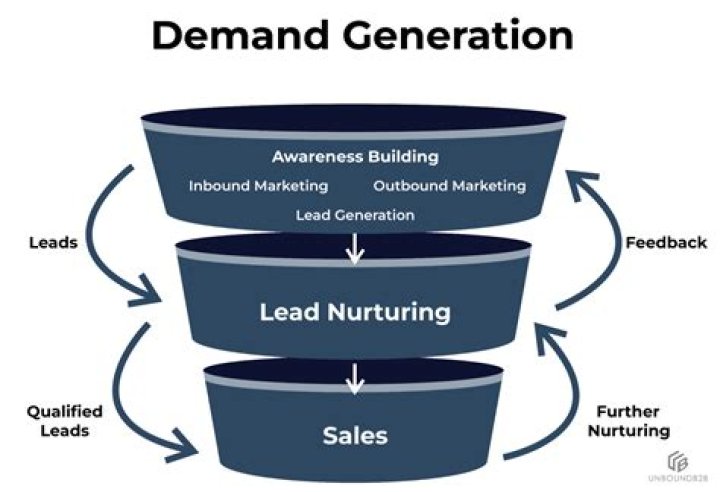
Demand Generation Marketing focuses on launching targeted marketing programs to generate attention and interest for your products and services. In other words, it is customary to create demand for what you offer. And demand generation marketing is all about getting quality leads engaged with your brand and ultimately buying.
Demand generation marketing involves a multi-step process to identify a problem potential customers are facing, present your brand to them as a potential solution, and demonstrate the value of choosing your business.
Why is demand generation marketing important?
The more demand you create for your business, the more you will earn and grow as long as you have inventory to back it up.
Demand generation programs can help you capture customer interest, enter new markets, and re-engage existing customers. In addition, demand generation marketing is a great revenue growth tool as it lowers the cost of acquiring customers and maximizes the return on your investment.
However, it's important to only encourage what you can handle. Too much demand creates bottlenecks, leaving you with not enough products or hours to meet all customer needs.
On the other hand, an oversupply creates surpluses and can lead to oversupply of products or labor time. You lose money if you have too many products on the shelf or if overpaid employees do nothing.
No business wants to do this, so it's important to adjust your demand generation strategies and grow your business with as little growth as possible.
Question generation and lead generation
People often put demand generation and lead generation in the same category. However, it is important to note that these are different initiatives.
- Lead generation is all about letting potential customers provide information that you can use to guide them through the sales funnel and ultimately convert them into a purchase. For example, you can create an eBook or guide and require users to enter their email address to access it. You can then send follow-up emails with helpful and related content that encourages them to learn more about your business and potentially become a customer.
- Demand generation focuses on informing your target audience by showing how your product or service can solve their problems. For example, you could post an article on a popular industry website to introduce readers to your business and increase brand awareness.
Because demand generation focuses on telling people about your business, it is more effective than lead generation, leading to action.
Marketing KPIs to generate demand
Now that you know what demand generation is, you may be wondering how to measure the success of your demand generation efforts.
Successful demand generation programs are measured by:
- Lead quality: how likely are prospects to buy? Do they have the right to make purchasing decisions?
- Number of leads converted to sales: how many leads are bought after visiting your site?
- The ability to demonstrate a contribution to corporate profits. Are your lead generation programs helping your business generate more leads and increase sales?
Some key performance indicators for demand generation marketing include:
- Conversions: How many people buy after visiting your site?
- Bounce Rate: What percentage of visitors leave your site immediately after visiting it?
- Traffic - on specific pages of your site (may reflect increasing demand)
Google Analytics allows you to set custom goals for your website so you can track key demand generation metrics. This will help you evaluate your campaigns and spend more time and effort on the strategies that will deliver the best results for your business.
10 strategies for generating demand
Looking for innovative ways to increase demand for your products and services?
Let's look at 10 demand generation strategies that will help your business attract more customers and increase sales.
1. Create quality content:
High-quality content is an integral part of a successful demand generation strategy. Content not only gives your audience a valuable resource to help them learn more about your business, it positions you as an authority in your industry.
However, content marketing success requires consistent effort. If you already post content regularly, consider how you can make it more valuable. Why would someone spend their time reading your content and not your competitors?
Including raw data and research, in addition to providing timely information on the latest trends, can help keep your content relevant and set it up for long-term success.
You can also create educational videos that explain how people can use your products and services to solve their problems. If you want to create videos and integrate them into your demand generation strategy, you don't have to worry about expensive equipment or a team of professional actors.
Instead, you can use the resources available to easily create and publish videos on YouTube, as well as on your website and blog.
Creative and useful content can help you increase demand and encourage people to learn more about the products and services you offer.
Video: why content matters
2. Offer free resources:
By providing valuable resources such as downloads, tools, and apps, you can help build trust between your audience and your brand. And when people find your content useful, they are more likely to return to your site and eventually make a purchase.
For example, WebFX offers a free SEO audit tool that allows users to enter their website URL along with the keyword they want to target and receive a free report detailing their SEO performance.
This tool is tightly integrated with our main SEO services. And if people are not satisfied with the SEO audit results, they can simply contact WebFX for more information and start improving SEO.
People who have a positive experience with your business are also more likely to advocate for your brand and share your business with friends and family.
Plus, offering valuable resources increases the likelihood that prospects will give you the information you need to qualify them as leads, such as their name, email address, and more.
3. Use Similar Audiences on Facebook
Facebook offers several advanced targeting options to help you reach your audience and drive demand for the products and services you offer.
On Facebook, Lookalike Audiences are custom audiences that are very similar to users who have previously expressed an interest in your products, services, or content based on demographic and behavioral similarities.
Lookalike Audiences allows you to increase the reach of your Facebook ad campaigns using the massive amount of data Facebook has collected about its users. You can upload Custom Audiences using the data you collect from real users and create Lookalike Audiences with many of the same characteristics. The more Custom Audiences you upload, the more you can start your network with lookalikes.
4. Collaborate with industry influencers
By partnering with influencers in your space, your company has instant access to your audience. When you identify the right people to work with, influencer marketing can be a great way to build brand awareness and create demand for your products and services.
Another reason influencer marketing is so powerful is because consumers trust their peers' opinions more than brand ads. And 40% of people bought an item online after using it by a social media influencer.
In addition, influencer marketing can help your business build valuable relationships and increase your credibility as an expert in your field.
You can also partner with influencers to host webinars and discuss topics that interest your audience. If you choose to partner with another company, choose one with a similar but not identical target audience so you don't lose any of your existing customers to a competitor.
By partnering with influencers, you can reach existing audiences, increase brand awareness, and tell more people about your business.
5. Try selected locations
You can also try recommended placements in display campaigns.
Composite placements allow advertisers to control the audience their ads are shown to, limiting their reach to those most likely to respond positively. In other words, they take a more targeted approach to advertising that can help your business build brand awareness and increase demand.
If you don't want to spend money reaching people who aren't interested in your products and services, the right placements can help educate your audience and increase demand for your offerings.
6. Using Display Remarketing
Did you know that 28% of people abandon their online shopping cart without making a purchase?
Display remarketing allows you to remind users of products and services they've already viewed on your site. As a result, it helps you retain and convert traffic, not just drive new customers to your site without any action on your part. This is a great way to get people interested in your business and create demand for the products and services you offer.
7. Email Marketing
Email is another powerful demand generation tool that you can use to keep in touch with potential customers, give them useful information about your business, and even offer special promotions and discounts.
However, you don't want to up your mailing lists all the time. Instead, send your subscribers only the tools, resources, and offers that can benefit them. This can help you gain the trust and loyalty of current and potential customers.
You can also run A/B testing to test various elements, such as subject lines and calls-to-actions (CTAs) to get the best results from your email campaigns.
8. Implement lead score
Lead Scoring evaluates the behavior of your prospects and the actions they have taken when interacting with your brand. This allows you to determine whether individual leads show enough interest to qualify as qualified leads.
You can also explore specific actions taken with your brand across various touchpoints. Have they seen a page on your website that indicates a purchase intent? Have they expressed an interest in demonstrating your product or using your free tools? These answers can help you determine where they are in the sales funnel and whether they can become a customer at some point.
Prospect scoring can also help you gauge a prospect's strength by evaluating their role in the organization in terms of decision-making responsibility and position in the company.
WebFX provides clients with access to our proprietary marketing automation software, MarketingCloudFX, so you can screen leads efficiently and accurately.
9. Marketing on social media
Social networks influence the choice of potential customers and purchasing decisions. And being on major social media platforms like Facebook, Twitter, LinkedIn, and Instagram can help you better understand your customers' needs, engage in conversations, and encourage them to learn more about your business.
Social media is a great way to help your audience understand your business and build trust with potential customers. You can also use social media to keep your audience informed about the products and services you offer and encourage them to contact you for more information.
In addition, you can obtain valuable information about your target group via social networks. You can then use this information to personalize your messages to better suit your needs and interests.
10. Evaluate and optimize
Finally, it's important to evaluate your demand generation marketing efforts to understand what's working well and determine what can be changed to get more results.
Setting up Google Analytics on your website and creating custom goals is a good start.
Pay attention to metrics like conversion rate, cost per acquisition, and cost per lead. You can then determine what works well for your business and remove the strategies that don't work.
Example of Marketing Demand Generation: American Express OPEN Forum
In 2007, American Express launched its OPEN Forum, an online space designed to help small businesses stay on top of industry trends, connect with other entrepreneurs, and provide access to exclusive content written by experts at small companies.
The OPEN Forum was created with the sole purpose of helping small businesses succeed. But today, it's the number one source of American Express leads for new cardholders.
While the platform doesn't sell American Express directly, it does contain useful information to help people learn more about the company and drive demand for small business credit cards.
Let's look at some key points from the American Express example.
1. Focus on your audience
American Express recognizes that when a small business thrives and grows, so does your business. That's why they created the OPEN forum with the aim of providing useful and useful information to help small businesses thrive.
In other words, American Express recognized that its target audience needed business advice and created an online space for small business owners to connect, learn and grow.
So how can you use the same idea to create demand for your business?
2. Create a community around your brand
An important feature of the OPEN forum is that it brings together and facilitates discussion between small business owners. Members can view and share tips, ask questions, and rate the usefulness of comments.
With the rise of LinkedIn, the American Express OPEN forum has also been integrated into the social platform to enhance community interaction.
Building a community around your brand is a great way to reach people and increase demand for your products and services.
3. Benefit from industry experts
A survey by NewsCred and Redshift Research found that only 20% of respondents trust financial content from a bank, while 53% of respondents trust financial content written by objective financial professionals.
American Express took advantage of these results by inviting industry experts to post on the OPEN forum. And when an article is written by American Express employees, it is clearly identified as branded content. This level of openness and transparency makes the OPEN Forum more trustworthy to readers and positions American Express as the authority in this area.
4. Do not force the sale
Demand generation marketing is not about selling your products or services. Instead, you should focus on increasing awareness of your brand and offering.
American Express achieves this by focusing on broad general themes. In fact, about 75% of the OPEN forum's content is designed to reach early funnel readers. While these posts are not directly related to American Express services, they provide a helpful overview of frequently asked questions and topics of interest to the target audience.
American Express also offers exclusive content and tutorials for OPEN Forum members. O'CLOCK. people who have provided their contact details to access the content. This allows the company to qualify leads and provide targeted content that ultimately encourages them to become customers.
In addition, the American Express card member publishes Spotlight case studies to tell real-life customer stories and how American Express credit cards have helped their business thrive. These case studies promote American Express and are designed to convert readers into potential customers.
While American Express does not force a sale, the company offers many conversion options and allows OPEN Forum members and visitors to leave comments while browsing the site.
5. Use email marketing
American Express also uses email marketing to provide OPEN forum members with weekly briefings featuring the week's top news stories. This helps keep American Express in the spotlight of potential customers without overloading their inboxes with information.
The content of the emails is concise enough to make it easy for readers to find news, get valuable information, and visit the American Express website for more information.
The practice of driving demand for a product or service by creating strategic content and marketing activities that expand your potential customer base.
It serves as an umbrella term for various marketing activities intended for long-term interaction. This can include accelerating the pipeline, generating leads and capturing demand through progressive marketing campaigns using media such as social media, newsletters and most inbound marketing tactics.
A form of marketing that aims to increase demand for a product or service rather than directly marketing the product or service.
For example, an e-newsletter about the importance of car maintenance will increase the demand for adjustments at car garages.
Using paid, proprietary and earned channels to increase awareness of and interest in the company's offerings through the use of technology.
Demand generation refers to the advertiser's targeted marketing efforts to increase awareness of a brand, product and/or service. The demand setting is commonly used in B2B, B2B, and B2C sales cycles. Marketers work with consumers and businesses in a variety of marketing areas to create a solid foundation for programs along with a structured sales process.
Literal Meanings of Demand Generation
Demand:
Meanings of Demand:
Desire to buy goods and services.
The amount of a good or service that consumers are willing to buy at a given price.
An active affirmation of something.
Urgent order.
(Power Supply) Specifically, peak demand or peak load, a measure of a utility's peak demand for electricity over a short of time, the integrated electricity load over a specified time interval.
Ask vigorously.
Demand something.
Forced requests for information.
Someone's demand.
Submit a citation.
Sentences of Demand
Prices usually rise when demand exceeds supply.
Modern society is responding to women's demands for equality.
Your work takes a long time.
She couldn't ignore the newborn's need for care.
I demand a meeting with the manager.
The bank demands payment of the mortgage.
I demand an immediate explanation.
This work requires a lot of patience.
Generation:
Meanings of Generation:
The act of creating or causing something, production, creation.
The act of creating a living being or reproducing an organism.
Race, family race.
A definite stage or stage in the natural descent of a rank or degree in a genealogy when members of a family are descended from the same parents, considered as a single entity.
Descendants, descendants.
The average time it takes children to grow up and have children of their own is usually around the age of thirty.
A step in the development of computers or a particular technology.
The formation or reception of a geometric quantity, for example a line, a surface, a body, by moving a point according to a mathematical law or value, by moving a point, a surface by a line, a sphere by a semicircle , and so forth.
A specific age group whose members can identify with each other culturally.
A version of a form of pop culture that is different from earlier or later versions.
A copy of a recording made from an earlier copy and thus further deteriorated in quality.
Sentences of Generation
This is the book of generations of Adam Genesis 5:1.
Create a line or curve.
Generation X grew up in the 1980s and the generation known as millennials grew up in the 1990s.
People sometimes wonder which generation of Star Trek is better, including the original and the next generation.