Debit and credit - How To Discuss
Debit and credit
What does debit and credit mean in accounting terms? In accounting, these terms have and should refer to transactions that increase or decrease the value of a. Accounting: Basic Accounting Concepts: Introduction. Back to Depending on the type of account, a debit or credit increases or decreases the account balance.
What are the rules of debit and credit?
Rules for amortization of loans. In financial accounting, debit and credit are the left and right sides of a TA account. They are used to indicate increases or decreases in certain accounts.
When to use debit or credit?
If you have the option to use a debit or credit card, you probably use a debit or debit card that has money in your checking account, but also has the Visa or Mastercard logo. Depending on what you choose, several things happen when processing payments:
Do debits always increase an account?
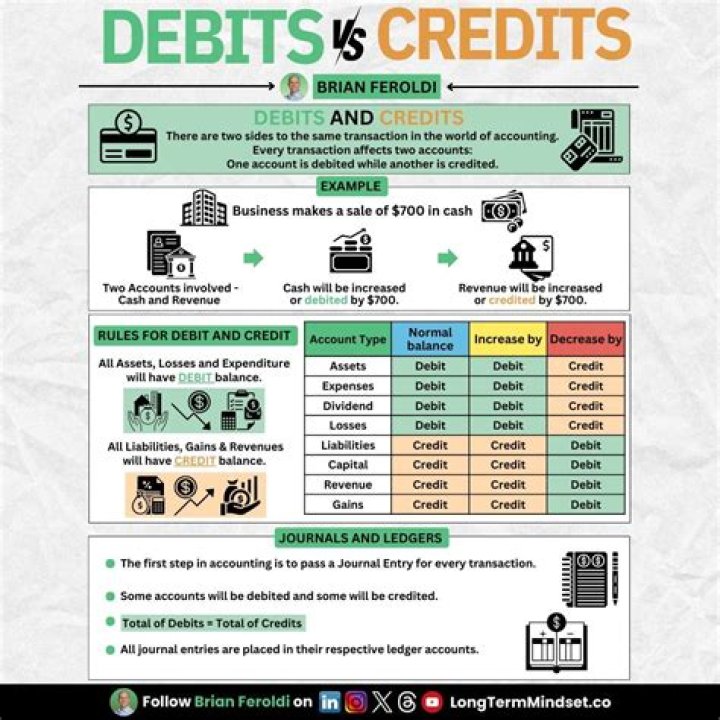
The debit does not always correspond to an increase and the credit does not always correspond to a decrease. A fee can increase one account and decrease another. For example, the board increases the asset accounts but decreases the liabilities and equity accounts, supporting the general accounting equation: assets = liabilities + equity.
How to remember debits and credits?
- Method 1: manual method. This method has helped hundreds of thousands of accountants and accountants around the world.
- Method 2: DC ADE LER method. This method has one distinct advantage of the many I've seen: it's easier to remember when you need it.
- Method 3: BS and P&L method. This is probably the most complete method.
What does debit and credit mean in accounting terms definition
Debit and credit are terms that accountants use when recording transactions in accounting. The amount of each transaction must be recorded in one debit account (left side of the account) and another credit account (right side of the account).
What is the principle of a debit and credit?
- For each transaction, the total on the left side of the account (or accounts) must match the total on the right.
- For each transaction, the total amount of debits must match the total of credits.
- Direct debit must be equal to credit.
 What is the difference between a debit and a credit?
The difference between debit and credit can be explained by the following reasons: Debit refers to the left side of the ledger account while credit refers to the right side of the ledger account. For private accounts, the recipient is charged and the donor is credited.
What accounts are debit and credit?
When a reservation is made, the original account for the transaction is credited and the recipient's account is debited. The debit is the left side of the account and the credit is the right side of the account.
 Is accounts payable a debit or credit?
The credit indicates the amount that a company or organization owes its suppliers or suppliers. Creditors are credited when goods or services are purchased on credit (rather than cash). Sellers will be charged when payment is made to the seller or seller.
Definition debit and credit
Definitions of Debit and Credit Business transactions are events that have a financial impact on an organization's financial position. Direct debit is commonly known as dr. in an accounting transaction while credit is abbreviated as cr. in an accounting transaction. Debit and credit are not used in one accounting system.
 What is debit vs credit in accounting?
Credit and Debit Balance - When a commission is added to an account, a credit must be added to the clearing account. In accounting, the debit column is to the left of the ledger and the credit column to the right. Fees increase assets or expense accounts and decrease liabilities or equity.
What is a credit debit balance?
A debit balance on the ledger occurs when the total charges for an account exceed the balances for that account. While the total debit and credit amounts in the general ledger should be the same, the amounts in some general ledger accounts, such as B. Cash, may differ, creating a debit balance.
 What is debit balance and credit balance?
Credit and debit balance. A ledger account can have both debit and credit balances, depending on which side of the account is greater than the other. Credit and debit balances are terms that are widely used in the accounting world, so it is important to understand the differences and their exact meanings.
What is the definition of debit credit?
Stream means left or left. For example, each journal entry has a debit and a credit amount. The debit amount is usually listed first and appears on the left side of the specified ledger account.
 What is the difference between a debit card and?
The main difference between a debit card and a credit card account is where the cards get their money from. The debit card will send it from your bank account and the credit card will charge it from your line of credit. Debit cards offer the convenience of a credit card, but work differently.
 What are the rules of credit and debit?
The rules for using debit and credit in a journal entry are as follows: Rule 1: All accounts that would normally have a debit balance increase in amount when a surcharge is added (left column) and decrease in size when credited ( column on the left ) is the column on the right).
 What is the meaning of debit and credit?
Debt and credit are the official accounting and bookkeeping terms that have opposite meanings and come from the Latin language. The flow comes from debere, which means guilt. Latin debitum means debt. Credit comes from the Latin word credere, which means to believe.
 What is the difference between 'debt' and 'debit'?
Duty refers to an action, state of mind, or object that one is obligated to perform by another, receive, or transmit to another when used as a name. In accounting, direct debit refers to an entry in the left column of an account when used as a name. A great way to remember the difference is to GO SOMETHING HERE.
 How can I better understand debit and credit?
The two related terms are justice and responsibility. Equity is what is left after deducting all assets and liabilities is the amount owed to other parties. In accounting, the debit column is to the left of the ledger and the credit column to the right. Fees increase the asset or expense account and decrease liabilities or equity.
How to learn accounting on your own?
- Understand the difference between bookkeeping and bookkeeping. Accounting and bookkeeping are terms that are often used interchangeably.
- Learn how to create spreadsheets. This is one of the most valuable ways to keep track of numbers on a chart.
- Read ledgers.
- Practice the basics of accounting.
- Examine the financial statements.
Is cash a debit or credit?
Cash is an account used in accounting with a regular debit balance. Billing takes place as part of a double posting process using debit and credit. A cash account is the amount of money that is in a business account or bank account.
What are the rules of debit and credit in accounting
In accounting, the words debit and credit refer to opposite sides of an account: debit means the left side of the account, credit means the right side of the account. The term debit comes from the Latin debitum and means what is owed (participle debere duty).
 Does debit mean increase and credit mean decrease in accounting?
Because the term direct debit refers to the left side of the account and credit to the right side. They are usually abbreviated as Dr for Flow and Cr. On credit. They do not mean increase or decrease, as is commonly believed.
What are the basic accounting rules?
The term generally accepted accounting principles (or GAAP) consists of three main sets of rules: (1) basic accounting principles and guidelines, (2) detailed rules and standards published by the FASB and its predecessor, the Accounting Principles Board (APB). ). ). ). and (3) generally accepted industry practices.
 Is income considered a debit or credit?
While the income is considered a loan and not an expense, it may come with some expense, including tax liabilities. Since you normally have to pay taxes on your income, income-related credits are usually tax liabilities.
 Is allowance for bad debts debit or credit?
When using the bad debt reserve method, the estimated bad debt costs are recognized by debiting and crediting the bad debt costs up to the amount of the bad debt allowance.
 What happens if I swipe my debit card as 'credit'?
Every time you make a credit transaction with a debit card, you always authorize the debit from your checking account. You do not have to pay interest or receive a bill. Choosing a credit for a point of sale will of course not help you to increase your credit.
 When to use debit or credit card
If you don't have the self-discipline to pay off your credit card debt every month, you may want to keep the money. Another potential downside to a credit card is the annual fee. Some cards, especially those with more lucrative bonus points, charge an annual fee to use your card.
 Should you get a prepaid debit card?
Prepaid debit cards can be a good option if you can't open a normal bank account with a traditional debit card. You may also want to consider an option if you are afraid of incurring credit card debt.
 What do you need to get a debit card?
Wiki response. To get a debit card, all you need to do is open a checking account. You need a BSN and/or tax identification number from the tax authorities. You will receive a debit card from the bank with which you can withdraw money from ATMs. Obtaining a traditional credit card is more difficult.
When should I use a secured credit card?
Secured cards are one of the best options for new loans or for those who have less credit debt than they do. You can use a secure card such as a traditional (i.e.
 What is debit and credit
A loan is a posting record that increases the liability or equity account or decreases the asset or expense account. It's in the accounts on the right. Direct debit is commonly known as dr. in an accounting transaction while credit is abbreviated as cr. in an accounting transaction. Debit and credit are not used in one accounting system.
Is a bank account a debit or a credit?
- The flow means it's gone.
- Credit means entitlement.
- Each transaction affects two or more accounts.
- At least one account is debited and at least one account is credited.
- The amount of the amounts owed must match the amount of the amounts borrowed.
- If money is received, withdraw cash.
- When the money is paid, credit it.
 What is the detailed concept of debit and credit?
A fee is an entry on the left that increases the asset or expense account or decreases the liability or equity account. Credit is a statement in law that increases the liability or equity account or decreases the asset or expense account. Debit and credit transactions are only used in double postings.
 Which accounts have a normal debit balance?
The debit balance is the account balance with a positive balance on the left side of the account. Debit accounts include assets, expenses, and losses. Examples of these accounts are property, plant and equipment (assets), wages (expenses), and retirement (losses).
Define debit and credit
Defining Debit and Credits. Synonyms of direct debit and credit, pronunciation of direct debit and credit, translation of direct debit and credit, definition of direct debit and credit in the German dictionary. New Mexico. 1. The position of the debt recorded in the account. 2. The left side of the account or ledger where the entries are made.
 What do you mean by debit and credit?
Fundamental accounting principles are based on debit and credit terminology. The consideration is the cost or gain of an asset when a loan is taken out. You will learn that a loan means an increase and an accrual means a deduction.