Cost segregation real estate - How To Discuss
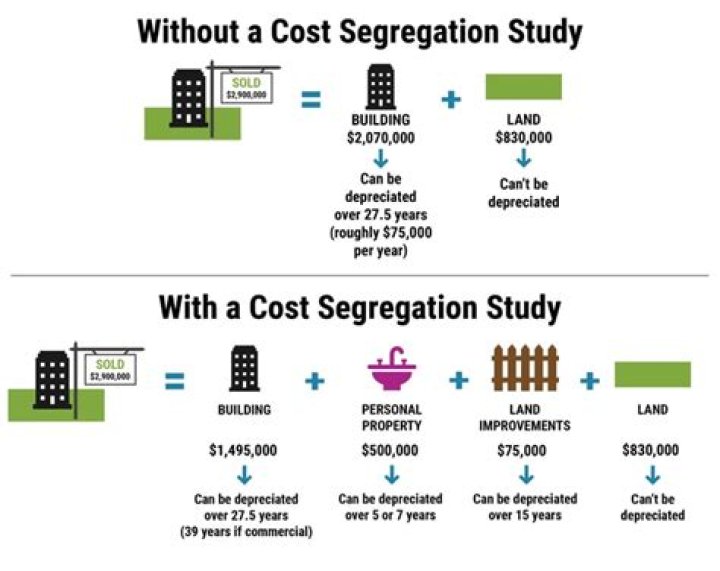
Cost segregation real estate
What are the rules for segregation? The Unbundling Rules are a set of rules requiring that the pre-existing listed groups of a loss-making company be separated from a new listed group created as a result of a transaction covered by the Unbundling Rules.
What is cost segregation?
United States website. Under US tax and accounting law, cost-sharing is the process of identifying personal property grouped with real estate and isolating personal property for tax reporting purposes.
What is residential segregation?
Residential segregation in the United States is the physical separation of two or more groups in different neighborhoods, or a form of segregation where a population is in different neighborhoods and forms a neighborhood-level habitat.
What do cost segregation services include?
- The engineer conducted an analysis and study of the site.
- Photographic or video documentation of the building and parts of the system.
- Engineer reviewed all design drawings
- The engineer has performed the analysis of the building / site
- The engineer analyzed all the collected data.
- Technical verification of all collected data
Is a cost segregation study right for You?
Because a cost-sharing study can cost between $10,000 and $15,000, cost-sharing studies are not for everyone. They are generally used only by commercial real estate investors or rental property owners with significant real estate activity who would benefit from a significant reduction in the federal income tax rate.
What are the economic consequences of segregation?
The many consequences of segregation include political, linguistic and social exclusion of minorities, increased crime and poverty in segregated areas and economic consequences. Segregation occurs at the local level, but creates widespread regional and national problems.
What is cost segregation in real estate investing?
Cost-sharing is a useful tax strategy that allows real estate investors who have bought, built, or purchased land or real estate to reduce their taxable income by conducting a cost-sharing study or shared ownership analysis.
 How can a cost segregation study help my business?
- Real estate expertise. Experience and knowledge are important factors to consider when choosing a cost-sharing company.
- Learn more about the cost allocation method. You need to understand the approach companies use to conduct research.
- Link. You need to search online for good cost sharing companies.
- Benefits for customers.
 How is cost segregation benefits multifamily investors?
Cost-sharing is an IRS-approved tax planning strategy that allows real estate investors to take advantage of the depreciation of their property. It works by allowing condominium owners to forecast depreciation schedules and receive immediate tax credits.
What is cost segregation in real estate?
Cost sharing is a lucrative tax strategy that should be used on almost all major commercial real estate purchases. An average value separation study can identify between 20% and 40% of a property's value for reclassification.
Cost segregation definition
What is cost sharing? Cost-sharing is a widely used strategic tax planning tool that helps businesses and individuals who have built, bought, expanded, or remodeled real estate of any kind to increase their cash flow by accelerating capital expenditure subsidies and deferring taxes.
What is cost segregation services
Cost-sharing is a widely used strategic tax planning tool that helps businesses and individuals who have built, bought, expanded, or remodeled real estate of any kind to increase their cash flow by accelerating capital expenditure subsidies and deferring taxes.
Cost segregation real estate professional
Professional Real Estate and Cost Sharing Cost segregation is a tax planning strategy used by savvy real estate investors to accelerate the depreciation of certain components of a property, thereby reducing tax liability. Where do cost sharing and REP come into play?
 What does a real estate agent do to sell a home?
- Selling a home involves a lot of paperwork and your real estate agent will take care of it.
- Professional brokers look for loopholes and unusual requests and read the fine print.
- In a multi-offer situation, they help identify the pros and cons of each offering, making it easier to make decisions.
- They will advise you when to counter-offer and when to accept the deal.
 What do real estate agents do for sellers?
Real estate agents are natural or legal persons who act as intermediaries in the purchase or sale of goods or companies and in the rental or rental of real estate. Being a broker means acting on behalf of other people. Brokers usually act on behalf of sellers and owners, although they sometimes act on behalf of buyers as well.
 How to sell real estate by owner?
- Determine if FSBO is right for you. The first step to successfully selling your home is deciding whether you are up to the challenge.
- Determine the right price for your property. Proper property valuation can be one of the most difficult aspects of the FSBO process, according to Sambrotto.
- Get ready to ship your home. The next hurdle after the valuation is preparing the house for sale and viewings.
- Take your advertising seriously. Now it's time to make a list.
- Be flexible and responsive with customers. When it comes to listing and displaying your home, get rid of your emotions.
- Negotiate a price. According to Sambrotto, every seller should be willing to negotiate a price with buyers. Buyers often expect to negotiate the price.
- Hire a real estate attorney. In addition to the paperwork required for a mortgage, transfer of ownership, and other legal requirements, the paperwork associated with selling a home is important.
- Consider iBuyer. A new option for homeowners is to sell their property to iBuyer.
Can a real estate agent sell their own house?
Yes, you can sell your property, but you must revoke your real estate agent license upon receipt. Many brokers have office fees, transaction fees, franchise fees, and REALTOR fees.
How far is Pomona from Oxnard?
Distance between Pomona and Oxnard. The distance between Pomona and Oxnard is 132 kilometers (82 miles). The distance from Pomona to Oxnard is 146 kilometers (91 miles).
What is the area code for Pomona CA?
Pomona, California area codes. 909. Pomona, California currently uses one area code, which is the 909 area code. In addition to information about the Pomona, California area code, you will find more information about the 909 area code and the California area code.
 How close is Pomona to San Diego?
The distance between San Diego and Pomona is 99 miles (159 kilometers). The distance from San Diego to Pomona is 186 kilometers (116 miles).
 Is Pomona California in Los Angeles County?
Pomona, California. Pomona (/pəˈmoʊnə/) is a city in Los Angeles County, California, United States. Pomona is located in the Pomona Valley, between the interior and the San Gabriel Valley. The city had a population of 149,058 according to the 2010 United States Census.