Complement cascade - How To Discuss
Complement cascade
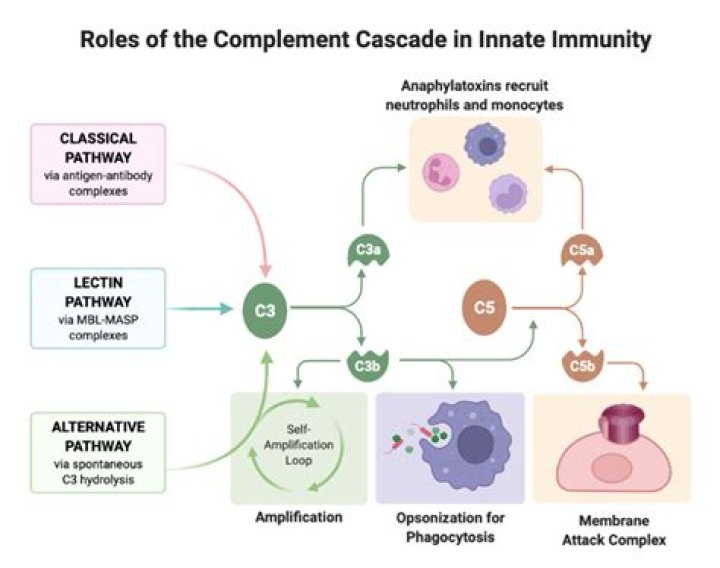
What activates the complement cascade? Additional waterfall. The additional waterfall includes the Classic, Alternative and MBL routes. The classical pathway is activated by the Fc portion of immunoglobulins, which are associated with antigens, apoptotic cells, gram-negative bacteria and viruses. The C1 complex, consisting of the C1q, C1r and C1s subunits, initiates the classical descending cascade.
What is an outcome of the complement cascade?
The complement cascade is a series of reactions in the blood. The cascade activates complement proteins. The result is an attack unit that makes holes in the membrane of bacteria and kills them.
How is complement activated?
The complement system can be activated when antibodies, proteins produced by cells of the immune system, bind to potentially harmful substances or antigens. These antigens can be proteins present on the surface of a unicellular bacterium. When antibodies bind to antigens, they can activate the classical complement pathway.
What is the classical pathway of complement activation?
The classic way to activate the plugin. The classical form is a chain of events in which complement components in specific sequences react in a cascade, resulting in cell lysis. It is activated by an antibody bound to an antigen (antigen-antibody complex), but never by a natural or free antibody.
What is the effect of complement activation?
Complement activation leads to the lysis of bacterial, viral, fungal, protozoal and many other cells by membrane attack complexes.
What are the three complement pathways?
The complement system consists of 3 complementary pathways: the classical complement pathway, the lectin pathway and the alternative complement pathway.
What are complement pathways?
- Classic course. This pathway includes complement components C1, C2, and C4.
- Alternative route. This pathway involves several factors B, D, K&I, which interact with each other and with C3b to form C3, C3bBb convertase, which can activate more
- The lectin pathway that binds to mannose.
- Lithic method.
- The role of complement in disease.
What is the complement cascade
The complement system, also known as the complement cascade, is part of the immune system that enhances (replenishes) the ability of antibodies and phagocytic cells to remove germs and damaged cells from the body and promote inflammation and the cell membrane of pathogens.
 What activates the complement cascade in biology
We replenish the waterfall. a biochemical process involving complement proteins C1 to C9, where one protein interacts with another in an order called the complement pathway. C5b together with C6, C7, C8 and C9 form a membrane attack complex that initiates cell lysis. Other molecules such as C3a and C5a act as cytokines and cause inflammation.
 What are the regulatory mechanisms of the complement system?
Fill in the rules. The complement system can cause severe damage to host tissue, so regulatory mechanisms are needed to restrict the complement pathway. Different plasma and membrane proteins regulate complement activation by inhibiting different stages of the cascade.
How is the complement system activated during an infection?
Complement is a system of plasma proteins that interact with pathogens to mark them for destruction by phagocytes. In the early stages of infection, the complement cascade on the surface of the pathogen can be activated by one or more of the three in Fig.
Which is the most likely outcome of complement activation?
What about the membrane attack complex (MAC), which occurs earlier after all C9 proteins have penetrated the bacterial plasma membrane? One of the results of complement activation is to stimulate inflammation. The inflammation can cause redness, fever, swelling, and pain.
 What is the role of the complement system?
Complement the system diagram. The complement system is part of the immune system that enhances (replenishes) the ability of antibodies and phagocytic cells to kill germs and damaged cells from the body, promote inflammation and attack the cell membrane of pathogens.
What is the alternative pathway of complement activation?
The classical complement pathway usually requires antigen-antibody complexes for its activation (specific immune response), while the alternative pathway can be activated by spontaneous hydrolysis of complement components 3 (C3), foreign material, pathogens, pathogens or damaged cells.
How can the complement system be activated using
The complement system is activated by an activated enzyme cascade. In such a cascade, the active complement enzyme produced by cleaving its parent zymogen then cleaves its substrate, another complement zymogen, into its active enzymatic form.
What is complement in microbiology?
Complement is a chain of enzymes whose activation ultimately leads to the destruction of cell membranes and the destruction of invading cells or microorganisms. Complement is an important part of the body's defense system (Fig.).
What happens when one complement component is activated?
The activation of a complement component leads to the activation of a second complement component. The second activated component acts on the third component of complement, the activation of the other components of complement continues in the same sequential manner.
How does the Cascade work in the complement system?
The cascade, an active complement enzyme produced by cleaving the original zymogen, then cleaves the substrate, another complement zymogen, into its active enzymatic form. This, in turn, clears and activates the next zymogen in the complement pathway. This allows a small amount of additives to be activated.
 How are zymogens distributed in the complement system?
In the case of the complement system, the precursor zymogens are widely distributed in body fluids and tissues without side effects. However, they are activated locally at the sites of infection and cause a range of serious inflammatory symptoms. The complement system is activated by an activated enzyme cascade.
How does the complement system protect against infection?
The complement system protects against infection in three ways. First, it creates a large number of activated complement proteins that covalently bind to pathogens and opsonize them to be taken up by phagocytes carrying complement receptors.
 What is the biological role of complement system?
The complement system is a cascade of enzymes that is a collection of proteins from the surface of the blood and cells to help antibodies remove pathogens from the body.
 What is the immune complement system?
The complement system is part of the immune system that enhances (replenishes) the ability of antibodies and phagocytic cells to kill germs and damaged cells from the body, promote inflammation and attack the cell membrane of pathogens.
What is the human complement system?
The complement system is part of the body's own immune system and consists of a series of protein molecules that activate each other in a so-called cascade. The proteins of the complement system are found in the bloodstream and in the fluid that surrounds the body tissues.
How can the complement system be activated by human
The serum contains more than 20 types of nutritional supplements that normally circulate in the human body in inactive forms (called zymogens or zymogens). Complement activation is activated by an antibody when it binds to an antigen. It can also be caused by certain components of innate immunity.
What is a complement pathway?
Full path: types, functions, and rules. The complement system is part of the immune system and consists of a series of proteins that interact in a highly regulated manner to eliminate pathogens.
How can the complement system be activated by stress
The complement system is initiated by conformational changes in molecular recognition complexes when dangerous signals are recognized. The subsequent cascade of enzymatic reactions is tightly regulated to ensure that complement is activated only at specific points where protection against pathogens is needed, avoiding damage to host tissue.
What are the effector functions of complement activation?
The effector functions resulting from this complement activation are: lysis of the pathogen by the C5b9 membrane attack complex, opsonization and phagocytosis of the pathogen, activation of immune and non-immune host cells by complement anaphylatoxins, inflammation, stimulation of an adaptive immune response, and antibody formation.
 How does the complement system work in apoptotic cells?
(B) Lectins and classical recognition molecules bind to apoptotic cells and, together with C3b of the alternative metabolic pathway, induce mild activation of complement. Apoptotic cells are not lysed, but are killed quickly and immunologically silently by phagocytes.
 When is complement fully activated in an infection?
The complement is only fully activated in the event of a pathogenic infection. During infection, complement induces inflammation, opsonization, phagocytosis and destruction of the pathogen and eventually leads to the activation of an adaptive immune response (Fig. 2).
Function of the complement system
The complement system is part of the immune system and consists of a series of proteins that actively interact with each other to kill pathogens. It helps antibodies and phagocytic cells kill pathogens, and damaged cells promote inflammation and attack the pathogen's plasma membrane.
What is the definition of complement system?
In immunology, a complex system of more than 30 proteins that work together to kill infectious microorganisms. In particular, the complement system causes lysis (rupture) of foreign and infected cells, phagocytosis (capture) of foreign particles and cell debris, as well as inflammation of the surrounding tissue.
What does the complement system contain?
The complement system consists of a series of small proteins that are synthesized by the liver and circulate in the blood as inactive precursors.
 What is the classical pathway of complement activation in the brain
The classical complement pathway is activated when IgG or IgM binds to its target antigen on the cell membrane or immune complex of the pathogen.
What is a classical pathway?
The classical form is a chain of events in which complement components in specific sequences react in a cascade, resulting in cell lysis.
What does complement C3 convertase, classical pathway mean?
The classical complement pathway is one of three pathways that activate the complement system, which is part of the immune system. The classical complement pathway is initiated by antigen-antibody complexes with IgG and IgM antibody isotypes. Once activated, different proteins are recruited to produce C3 convertase, which cleaves the C3 protein. The C3b component of the cleaved C3 binds to the C3 convertase to form the C5 convertase, which cleaves the C5 protein. Products distributed to.
Complement classical pathway
The classical complement pathway is one of three pathways that activate the complement system, which is part of the immune system. The classical complement pathway is initiated by antigen-antibody complexes with IgG and IgM antibody isotypes. Once activated, different proteins are recruited to produce C3 convertase, which cleaves the C3 protein. The C3b component of the cleaved C3 binds to the C3 convertase to form the C5 convertase, which cleaves the C5 protein. Products are distributed and Read more.
 What is the purpose of a complement pathway?
Full path: types, functions, and rules. The complement system is part of the immune system and consists of a series of proteins that actively interact with each other to kill pathogens.
What is alternative path?
Alternative way. The second path for the flow, manifested as a refracting discharge. If two paths are proposed, since the discharge is alternating or oscillating, it will choose the path with the least inductance.
 Where is the lectin pathway found in the body?
The lectin pathway is activated by the interaction of microbial carbohydrates with mannose binding lectin (MBL) or ficolins in plasma and tissue fluids. (Lectins are proteins that bind to carbohydrates.) The lectin pathway is mediated by two groups of proteins found in blood plasma and tissue fluids:.
What is the role of lectin in the complement system?
Mannose-binding lectin (MBL), also known as mannan-binding protein (MBP), is a protein that participates in the activation of complement through the lectin pathway. The complement system provides direct protection against infection and has an anti-inflammatory effect. MBL deficiency is also defined differently as serum levels.